

Accountability
Accountability in the workplace, without the blame
Most people say they want more accountability in their team. What they often get is more blame. The difference matters, because blame makes people hide problems and ownership makes them fix them.
The short answer: real accountability starts with the leader owning outcomes, including the ones that weren't their fault. When leaders take ownership first, people feel safe to own their own mistakes. Add clear expectations, commitments made out loud, regular check-ins and debriefs without blame, and accountability becomes part of how the team works rather than something done to people.
Accountability isn't the same as blame
In a blame culture, the first question when something goes wrong is "whose fault was it?". People learn to protect themselves. Mistakes get hidden, bad news travels slowly and the same problems keep coming back. The finger of blame always points somewhere else: another department, a system, a decision made higher up.
In an ownership culture, the first question is "what could I have done differently?". Problems surface early because nobody is afraid to raise them, and they get fixed.
The leader goes first
One of the most powerful stories I know about ownership comes from Jocko Willink, a former US Navy SEAL commander. In 2006, during an operation in Iraq, a series of mistakes in the confusion of battle led to a firefight between friendly forces. One man was killed and several were wounded. Willink was ordered to prepare a debrief for senior officers on what had gone wrong and who was responsible.
He wrote out every mistake and who had made it. There was plenty of blame to go around. But minutes before the debrief he realised there was only one person responsible: him, as the commander. When members of his team stood up to take the blame, he told each of them it wasn't their fault. Rather than being fired, he was kept in charge, and trust in him went up, both from his team and from his own commanding officer.
Willink calls this extreme ownership: taking full responsibility for everything in your world. It hurt his pride. It also showed his team exactly what he expected of them.
"But it's not fair"
The most common objection is fairness: why should I take ownership of something that was clearly someone else's fault? It can feel deeply unfair. But owning a situation isn't about accepting the blame for it. It's about putting yourself in the most useful state of mind to fix it. The moment you decide it's someone else's problem, you have given away your power to do anything about it.
Blame was my own default for years, at work and at home. My wife pointed it out when I asked her what she thought my biggest weakness was. I wrote the word "blame" on a sheet of paper and stuck it on the bathroom mirror, so I would see it every day. Over time I started catching myself, and asking instead: "What can I control here? What could I do differently?"
It also helps to step into the other person's shoes. If I had their experiences and their pressures, I would probably see it the way they do. That thought turns frustration into curiosity, and curiosity is far more likely to lead somewhere useful.
How to build accountability in the workplace, fairly
-
Make expectations unmistakable
People can't be accountable for something that was never clear. Agree what good looks like, who owns what and by when. A team charter is a good place to write it down.
-
Ask for commitments out loud
People like to be consistent with what they have said, especially in front of others. The psychologist Robert Cialdini describes a restaurant that cut its no-show rate from around 30% to 10% simply by changing "Please call if you have to cancel" to "Will you please call if you have to cancel?" and waiting for the customer to say yes. In a team, ask "What will you commit to by Friday?" rather than assigning tasks.
-
Check in regularly, not just at the deadline
A short weekly round where each person shares progress and answers "What help do you need from the rest of the team?" keeps commitments alive and makes asking for help normal.
-
Debrief without blame
When something goes wrong, talk it through: what happened, what we learnt, what we'll do differently. Keep the focus on the system and the decisions, not on finding a culprit.
-
Act when it's needed
Ownership culture isn't soft. If someone repeatedly fails to deliver after clear expectations, support and honest conversations, it has to be addressed, or the rest of the team learns that commitments don't matter.
What if you're not the boss?
I'm often asked whether this only works for senior leaders. It doesn't. Leadership is a state of mind, not a job title. A junior person or a middle manager can't change a whole organisation's culture alone. But taking ownership of your own corner of it, consistently, is noticed. It sets an example for colleagues and it builds trust with the people above you.
Try this week: next time something goes wrong in your team, open the conversation by saying what you could have done differently, before anyone else speaks.
Questions people ask
What is accountability in the workplace?
Taking ownership of commitments and outcomes, including fixing problems rather than looking for someone to blame. In a healthy team it applies to the leader first.
How do you hold employees accountable without micromanaging?
Make expectations clear, ask people to commit to outcomes out loud, check in briefly and regularly, debrief without blame and address repeated problems honestly.
How do you fix a blame culture?
Start with the leader. Own mistakes publicly, respond to bad news with curiosity rather than anger, run blame-free debriefs and recognise people who raise problems early.
Related guides
Sources
The stories and practical ideas on this page come from the book. The figures in the blue boxes come from the published research below.
- Edmondson, A. (1999). Psychological Safety and Learning Behavior in Work Teams. Administrative Science Quarterly, 44(2), 350 to 383.
- Gallup. Re-Engineering Performance Management.
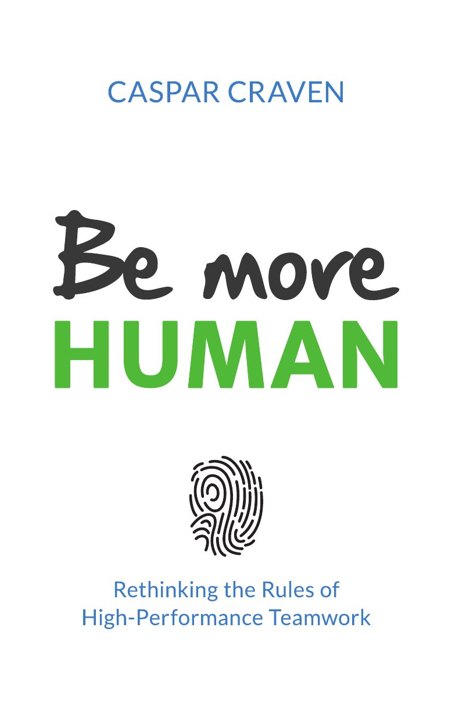
From the book Be More Human
The ideas and stories on this page come from Be More Human: Rethinking the Rules of High-Performance Teamwork by Caspar Craven: what he learnt, often the hard way, about building teams in business, at home and at sea. It's written for anyone asking why their team isn't getting the results it could, or what's wrong with the culture.