

Leadership
Human-centred leadership: leading people as people
For a long time, leadership meant being the strongest person in the room, with all the answers. The leaders people now follow most willingly do something different. They treat the people in their team as people, not resources, and they are honest about being human themselves.
The short answer: human-centred leadership means putting people first: listening properly, caring about people as individuals, being honest about your own weaknesses and serving the team rather than the other way round. Gartner's research describes it as authentic, empathetic and adaptive leadership, and found that only 29% of employees say their leader leads this way.1
What is human-centred leadership?
Human-centred leadership, sometimes spelt human-centered leadership, starts from a simple idea: the people in your team are people first, not resources. It sounds obvious. In practice it changes how you listen, how you make decisions and how you handle pressure.
From ego to service
Early in my career I believed a leader stood apart from the team, gave the orders and was followed because they were in charge. Looking back, that was ego-driven leadership, and I wasn't very good at it. My training had been in management, not leadership, and they are very different things.
What I came to see is that a leader is a member of the team. You are there to serve the team and help each person do their best work, just as much as they are there to help you. A simple mantra helped me more than any leadership model: it doesn't matter who is right, it only matters what is right.
Six habits of human-centred leadership
-
They keep a finger on each person's pulse
When the explorer Ernest Shackleton's ship was trapped and crushed in the Antarctic ice, he went on to get every member of his crew home alive. His captain later wrote that Shackleton seemed to keep a mental finger on each man's pulse. Human-centred leaders pay that kind of attention: they notice how people are doing, not just what they're delivering.
-
They listen, then act
Few things are more powerful than giving someone your full attention. The test is what happens next. People trust leaders who act on what they hear.
-
They are honest about their weaknesses
Everyone has a few patterns that trip them up again and again. Mine were blame and impatience. The leaders I've learnt most from stare hard at their own weaknesses, ask people they trust to point them out, and are open with their teams about the work they're doing on them. The researcher Brené Brown defines vulnerability as having the courage to show up when you can't control the outcome. Your team almost certainly knows your weaknesses already. Admitting them makes you more credible, not less.
-
They get out of the way
A mentor once said to me: "What's the point in hiring top-quality people and then interfering?" When I eventually took a full month off and stayed off email, the team closed some great deals while I was away. For a moment my ego felt bruised. Then I realised it was exactly what I'd hoped for. Tell people the outcome you need and let them surprise you with how they get there.
-
They absorb pressure rather than passing it on
Human-centred leaders are honest with their team about the reality and, at the same time, soak up enough pressure that people can do their best work. In a large organisation this is often the most valuable thing a middle manager does.
-
They lead at every level
Leadership is a mindset, not a title. Some of the best leaders I've worked with were junior people who quietly checked that each colleague was OK and brought a can-do attitude to every problem. Anyone can lead this way, starting today.
Isn't this just being soft?
No. Human-centred leadership still sets high standards, makes hard decisions and deals with poor behaviour. The difference is in how. You can be demanding about results and still treat people with care. In my experience, teams led this way deliver more, not less, because people give the extra effort that can't be ordered.
The idea at the centre of it is simple: put people first and the results will follow. I had it the wrong way round for years. When I turned it around, the results improved faster than they ever had while I was focused only on the numbers.
Try this week: ask two people you trust, "What's one thing I do that gets in the way of the team?" Thank them, write it down, and don't argue.
Questions people ask
What is human-centred leadership?
A way of leading that puts people first: listening properly, caring about people as individuals, being authentic about your own strengths and weaknesses and serving the team rather than commanding it.
What are the qualities of a human-centred leader?
Gartner's research highlights three: authentic, empathetic and adaptive. In practice that shows up as listening and acting, honesty about weaknesses, giving people room to work and absorbing pressure rather than passing it down.
Is human-centred leadership effective?
Research from Gartner found employees with human leaders were substantially more likely to be highly engaged, and Gallup's work shows engagement is closely linked to productivity, profitability and retention.
Related guides
Sources
The stories and practical ideas on this page come from the book. The figures in the blue boxes come from the published research below.
- Gartner (2022). Gartner HR Research Identifies Human Leadership as the Next Evolution of Leadership.
- Harter, J. (2026). U.S. Employee Engagement Declines From 2020 Peak. Gallup.
- Gallup (2026). State of the Global Workplace: 2026 Report.
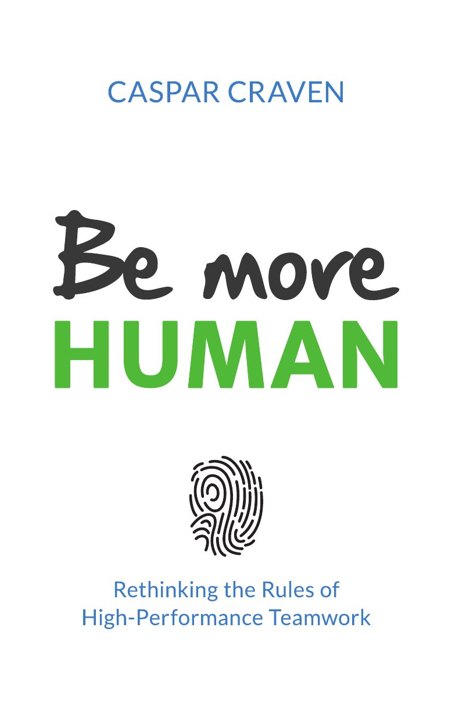
From the book Be More Human
The ideas and stories on this page come from Be More Human: Rethinking the Rules of High-Performance Teamwork by Caspar Craven: what he learnt, often the hard way, about building teams in business, at home and at sea. It's written for anyone asking why their team isn't getting the results it could, or what's wrong with the culture.