

Retention
Employee engagement and retention
When good people leave, the reason given is often money or a better offer. The real reasons usually started months earlier, and many of them were in the manager's hands.
The short answer: engaged people stay, and disengaged people leave or, worse, stay and switch off. Gallup found that 52% of people who quit voluntarily say their manager or organisation could have done something to keep them, and 51% say nobody had talked to them about their job satisfaction or future in the three months before they left.1 Most retention problems start as engagement problems.
How employee engagement and retention are linked
Employee engagement and retention are two sides of the same coin. People who feel trusted, heard and part of something worthwhile rarely go looking for another job. People who have quietly switched off are one phone call from a recruiter away from leaving, and some stay and disengage further, which can be worse.
The real cost of losing someone
Replacing a person is expensive. Gallup estimates the cost at between half and twice their annual salary, once recruitment, onboarding, lost productivity and the knock-on effect on the rest of the team are counted.1 For a senior person or a specialist the cost is at the top of that range. And the hardest cost to measure is often the biggest: the knowledge, relationships and goodwill that walk out of the door.
People leave cultures, not just jobs
When MIT Sloan Management Review researchers analysed why people left their employers during the so-called Great Resignation, a toxic culture was 10.4 times more powerful than compensation in predicting a company's attrition rate. The leading elements were failure to promote diversity, equity and inclusion, people feeling disrespected, and unethical behaviour.2
A team doesn't need to be toxic to lose people, though. The more common story is slower. Someone stops feeling heard. Their ideas go nowhere. The work drifts away from what they're good at. Nobody asks how they're doing. Then a recruiter calls at the right moment.
I came close to losing an entire team once. Under pressure, I was piling it onto everyone around me, until my business partner told me plainly that if I carried on, every single person would leave, him included. Nobody had resigned yet. But they were already halfway out of the door in their heads.
Six ways to improve retention through engagement
-
Have stay conversations, not exit interviews
By the time of the exit interview it's too late. Ask regularly, one to one: "What keeps you here? What might tempt you away? What would make your work better?" Then act on what you hear.
-
Be the buffer
In a large organisation, pressure arrives from above all the time. Good leaders are honest with the team about the reality while absorbing enough of the pressure that people have room to do their best work. Teams remember who protected them.
-
Talk about the future
People leave when they can't see where they're going. Talk about their development and next steps, even when the honest answer is that the next step may eventually be somewhere else. People rarely leave a manager who is genuinely invested in their growth.
-
Recognise people properly
Specific, regular recognition is one of the most underused retention tools there is.
-
Play the long game
Teams that only chase the next target ride a roller coaster of morale, with frantic pushes at month end and quarter end. Teams that build trust and skills steadily tend to stay together, even when a target slips. A business coach once told me that the purpose of a goal is not necessarily to hit the goal, but to develop the skills and the team so that you are capable of hitting it.
-
Deal with the people who drag others down
This one is uncomfortable. Sometimes one person, often a capable one, actively works against what the team is trying to build. I once held on to someone like that for too long because I feared the gap they would leave. When they went, a less experienced colleague stepped into the role and thrived. Keeping a corrosive person can cost you several good ones.
Try this week: pick the person in your team you would least want to lose and have a stay conversation with them. Ask what keeps them, and what would make them think about leaving.
Questions people ask
How does employee engagement affect retention?
Engaged employees are far less likely to leave. In Gallup's research the most engaged business units had substantially lower turnover than the least engaged, and many voluntary leavers say their departure could have been prevented.
Why do good employees leave?
Often because of how they are managed: not feeling heard, not seeing a future, not being recognised, or working in a culture where they feel disrespected. A better offer is usually the trigger, not the cause.
What is a stay conversation?
A regular one-to-one conversation about what keeps someone in their role, what might tempt them away and what would make their work better, held long before they think about leaving.
Related guides
Sources
The stories and practical ideas on this page come from the book. The figures in the blue boxes come from the published research below.
- McFeely, S. and Wigert, B. (2019). This Fixable Problem Costs U.S. Businesses $1 Trillion. Gallup.
- Sull, D., Sull, C. and Zweig, B. (2022). Toxic Culture Is Driving the Great Resignation. MIT Sloan Management Review.
- Yi, R. (2024). Employee Retention Depends on Getting Recognition Right. Gallup, with Workhuman.
- Gallup (2024). The Relationship Between Engagement at Work and Organizational Outcomes: Q12 Meta-Analysis, 11th edition.
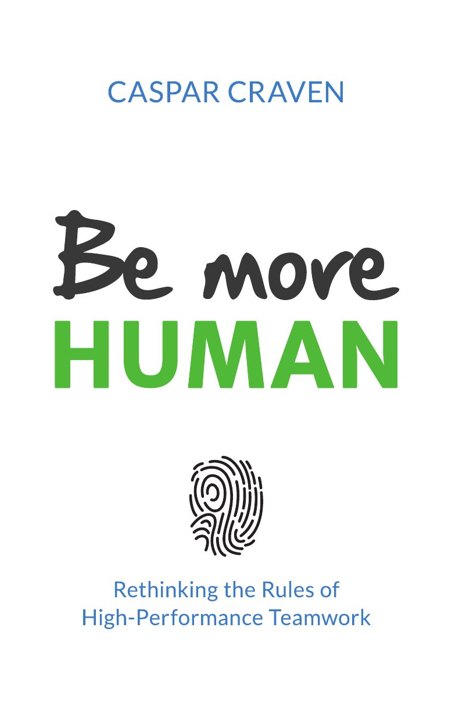
From the book Be More Human
The ideas and stories on this page come from Be More Human: Rethinking the Rules of High-Performance Teamwork by Caspar Craven: what he learnt, often the hard way, about building teams in business, at home and at sea. It's written for anyone asking why their team isn't getting the results it could, or what's wrong with the culture.