

Motivation
How to motivate employees
You can't make anyone do anything, at least not for long. What you can do is create the conditions in which people motivate themselves. Here's how.
The short answer: lasting motivation comes from inside people, so a manager's job is to create the right conditions rather than to push. Psychologists point to three basic needs: a sense of control over your work, getting better at it, and connection with others.1 Add work that makes visible progress, and recognition for doing it well, and most people will motivate themselves.
The wind and the sun
There is an old fable about the wind and the sun arguing over who was stronger. They spot a man walking along a road in a heavy coat and agree that whoever gets the coat off him wins. The wind blows as hard as it can, and the harder it blows, the tighter the man holds on to his coat. Then the sun comes out and gently warms the air. Before long, the man takes his coat off and sits down in the shade.
Most of the management I was taught was the wind. Targets, pressure, a carrot for hitting the number and a stick for missing it. It can get results for a quarter. But a pressed worker rarely gives their best for long, and the pressure has a cost that shows up later in trust, health and turnover.
People do things for their reasons, not yours
This is the most useful sentence I know about motivation. The reason a project matters to you, the bonus, the promotion, the target your boss set, is very rarely the reason it matters to the people doing the work. If you want someone's best effort, you need to understand what matters to them and find where it overlaps with what the team needs to achieve.
The only way to find out is to ask, and then really listen.
How to motivate employees: five ways to create the conditions
-
Give people a say in how
Be clear about the outcome you need, then let people work out how to get there. A friend of mine who commanded a naval battle group put it well: tell people what outcome you want and let them surprise you with their ingenuity. In a large organisation there are processes you can't change, but there is usually more room for choice than people realise.
-
Help them get better at what they're good at
Mastery is motivating, and it is fastest when people build on their strengths rather than labouring over their weaknesses. I once hired a salesperson with huge energy who started brilliantly, then faded. Over coffee he admitted he hated rejection. We moved him into a consulting role, which didn't fit either, and finally into looking after client relationships. He thrived. The lesson was to keep looking for the right fit rather than writing someone off.
-
Connect people to each other and to the bigger picture
Feeling part of a team that trusts each other is a powerful motivator in its own right. So is understanding why your work matters. Help the team see how what they do contributes to something bigger, and give them a hand in shaping that story. See creating a team vision.
-
Make progress visible
Few things drain motivation like effort that seems to go nowhere. Break big goals into steps people can see, clear the blockers that slow them down, and mark the small wins.
-
Recognise specific behaviour
Tell people what they are doing well, specifically and often. It sounds obvious, but our brains are wired to spot problems, so most workplace feedback is about what's wrong. Deliberately noticing what's right changes the tone of a team.
What about money?
Pay has to be fair. People who feel underpaid or treated unfairly will be demotivated, and no amount of recognition will fix that. When I was locked in a tense negotiation with a sales director who wanted more money, it helped to step into his shoes and ask why he saw it the way he did. We found a deal tied to the team's results that worked for both of us. But beyond fairness, money is a weak motivator for the kind of effort that can't be specified in a job description.
Start with yourself
People take their cue from the leader. If you are visibly energised by the work, open about what you're learning and honest about your mistakes, the team notices. If you're stressed and passing it on, they notice that too. The most motivating thing a manager can do is often to model what they want to see.
Try this week: ask each person "What part of your work gives you the most energy, and what drains it?" Then look for one small change that gives them more of the first.
Questions people ask
What is the best way to motivate employees?
Create the conditions for people to motivate themselves: a say in how they work, a chance to get better at what they're good at, connection to the team and the bigger picture, visible progress and specific recognition.
Do bonuses motivate employees?
Fair pay matters and unfairness demotivates. But bonuses tend to drive short-term, target-focused behaviour, and rarely produce the kind of discretionary effort that comes from people caring about their work.
How do you motivate an employee who has lost interest?
Start by listening. Ask what's changed and what matters to them now. Often the answer is a poor fit between the role and their strengths, or a sense that their effort isn't going anywhere, both of which can be worked on.
Related guides
Sources
The stories and practical ideas on this page come from the book. The figures in the blue boxes come from the published research below.
- Ryan, R. and Deci, E. (2000). Self-Determination Theory and the Facilitation of Intrinsic Motivation, Social Development, and Well-Being. American Psychologist, 55(1), 68 to 78.
- Gallup (2014). Employees Who Use Their Strengths Outperform Those Who Don't.
- Amabile, T. and Kramer, S. (2011). The Progress Principle. Harvard Business Review Press. Summary: The Worth of Small Wins: Teresa Amabile and Steven Kramer on The Progress Principle. American Management Association.
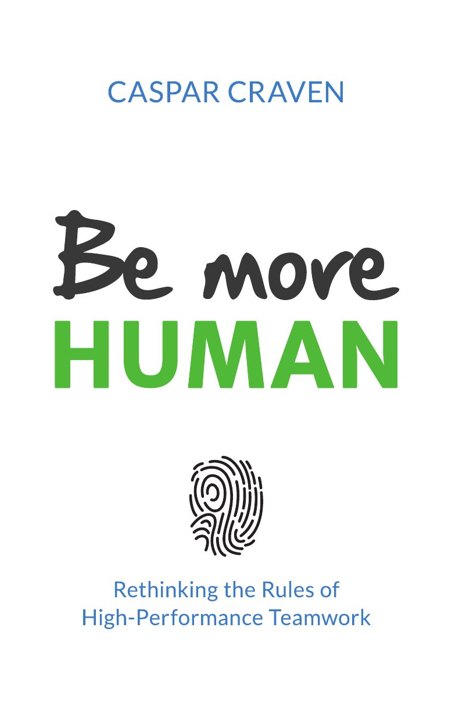
From the book Be More Human
The ideas and stories on this page come from Be More Human: Rethinking the Rules of High-Performance Teamwork by Caspar Craven: what he learnt, often the hard way, about building teams in business, at home and at sea. It's written for anyone asking why their team isn't getting the results it could, or what's wrong with the culture.