

Employee engagement
Employee engagement ideas that actually work
Most lists of engagement ideas are about events and perks. These are different. They are small habits and rituals a team leader can run inside a normal working week, and most of them cost nothing.
The short answer: the engagement ideas that work best are small, regular habits rather than one-off events: listening properly, recognising specific behaviour, connecting the work to the bigger picture, using people's strengths and marking progress. Pick two or three, run them every week, and let the team take them over.
Before you start
Two things make the difference between an idea that sticks and one that fizzles out after a fortnight. First, involve the team in choosing. People only do things for their own reasons, not yours. Second, put it in the calendar. A ritual that happens every Monday is worth ten good intentions.
Pick two or three of the employee engagement ideas below. Run them for a couple of months before adding more. Unlike one-off engagement activities, each of these is designed to become a habit.
Employee engagement ideas for listening and trust
- Distraction-free one to ones. Phones and laptops away. Ask what's going on for them and what's important to them, write it down and play it back.
- "What help do you need from the team?" End the weekly round-up with this question for each person. It turns a status update into a team that supports each other.
- Act on one thing quickly. When someone raises something you can fix, fix it fast and visibly. Nothing builds trust faster than people seeing you act on what they said.
- Leader goes first. In a team meeting, share a mistake you made recently and what you learnt. It makes it safe for others to do the same.
Engagement ideas for values and recognition
- Weekly values call-outs. Each week, two people are recognised for living one of the company's values, with the specific example. Start it yourself, then hand it to the team so they spot it in each other. A bar of chocolate is plenty.
- "At its very best." Take one company value and ask the team: "What do we do when we show this value at its very best?" Write down the concrete examples. It turns a word on a poster into behaviour.
- Praise in specifics. "Great job" is pleasant. "The way you handled that client call stopped a complaint becoming an escalation" is remembered.
- Make the values visible. Ask the team to create something for the wall or the shared channel that shows what the values look like in your team. One team I led ended up inviting a graffiti artist into the office.
Engagement ideas for purpose and direction
- Translate the strategy. When a new strategy or set of priorities comes down from above, spend 20 minutes with the team on one question: "What does this mean for us, and what part do we play?"
- Ask "What's our story?" Ask the team to describe, in a sentence, what the team is aiming at. If the answers don't match, that's your next project.
- Bring in the customer. Share a piece of feedback from a customer or end user each week, good or bad, so people see who their work is for.
- Put the story on the wall. Once the team has agreed its direction, keep it somewhere everyone sees it, so it doesn't vanish into a slide deck.
Engagement activities for strengths and growth
- Strengths swap. Ask each person to ask three people who know them well what they are uniquely good at, then share the patterns with the team. We tend to underrate what we do well.
- Reshape one piece of work. Within the roles you have, move one project, client or task to the person whose strengths suit it best.
- A team learning slot. Once a month, someone shares something useful they have learnt. A book, a podcast, a mistake, a technique.
- Small experiments. Invite small groups to try one improvement for a month and report back on what happened. People own what they test.
Engagement activities for progress and wellbeing
- Friday wins. Five minutes at the end of the week where everyone names one thing that moved forward. It makes progress visible.
- Clear one blocker a week. Ask "What's slowing you down?" and remove one obstacle each week.
- A short debrief after anything that goes wrong. What happened, what we learnt, what we'll do differently. No blame.
- Protect focus time. Agree as a team on a block each week with no meetings.
- Notice the person, not just the work. Remember what's going on in people's lives and ask about it. It is the most human thing on this list, and often the most valued.
Why small beats big
Big engagement events can be fun, but the effect fades by the following Monday. Small rituals compound. On any one day you barely notice the difference. Over months they change how a team feels. The same is true at home: my family ran a values prize over breakfast every day for a year, and when we hit a genuine crisis at sea those values were the first thing we reached for.
Try this week: pick one idea from this page, tell the team you're trying it for six weeks, and ask them to tell you honestly at the end whether it's worth keeping.
Questions people ask
What are low-cost employee engagement ideas?
Most of the best ones cost nothing: distraction-free one to ones, weekly values call-outs, specific praise, translating the strategy for the team, strengths conversations and a weekly round-up of wins.
How often should we run engagement activities?
Little and often beats big and occasional. A ten-minute ritual every week does more than an annual away day, because habits build up over time.
Do engagement ideas work for remote teams?
Yes. Most of these ideas work just as well on a video call or in a team channel, and listening and recognition matter even more when people aren't in the same room.
Related guides
Sources
The stories and practical ideas on this page come from the book. The figures in the blue boxes come from the published research below.
- Yi, R. (2024). Employee Retention Depends on Getting Recognition Right. Gallup, with Workhuman.
- Gallup (2014). Employees Who Use Their Strengths Outperform Those Who Don't.
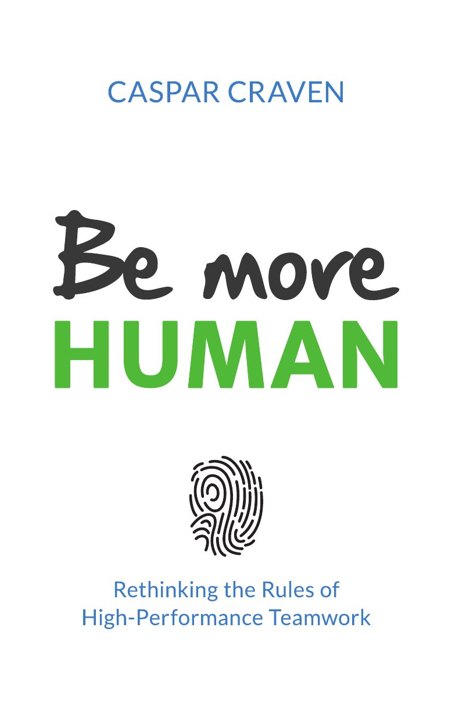
From the book Be More Human
The ideas and stories on this page come from Be More Human: Rethinking the Rules of High-Performance Teamwork by Caspar Craven: what he learnt, often the hard way, about building teams in business, at home and at sea. It's written for anyone asking why their team isn't getting the results it could, or what's wrong with the culture.