

Employee engagement
How to improve employee engagement in your team
The engagement survey results are in and your team's scores aren't where you'd like them. Here is a straightforward 90-day plan for doing something about it, without another corporate initiative.
The short answer: improve engagement by working on it inside your own team, in small, consistent steps. Share the results honestly, listen to what is really going on, pick one or two things to change together, and build them into the weekly calendar. Change happens in what you do every week, not in a one-off action plan.
Why most action plans don't work
The usual pattern in a large organisation goes like this. The survey runs, the results arrive, each manager is asked for an action plan, the plan gets filed, and next year's scores look much the same. It isn't because managers don't care. It's because an action plan is a document, and engagement is an experience. Nothing changes until what people experience each week changes.
Here is a different approach, in four stages over roughly 90 days.
A 90-day plan to improve employee engagement
-
Weeks 1 and 2: share the results honestly
Show the team the results, including the uncomfortable parts. Don't explain them away or get defensive. Say what surprised you and what you think you might have contributed to. When a leader owns their part first, it gives everyone else permission to be honest too.
Then ask the team, rather than telling them: "What do you think is behind these numbers?"
-
Weeks 2 to 4: listen one to one
Group sessions only get you so far. Sit down with each person, phones and laptops away, and ask what's going on for them and what would make their work better. Don't expect the whole truth first time. Write down what you hear and play it back so they know it landed.
-
Week 4: pick one or two things, together
Bring back the themes you heard and agree, as a team, on one or two things to change. Not ten. The temptation is to fix everything at once, and it nearly always ends with nothing sticking. Choose things that are within the team's control and that people genuinely care about.
Good candidates often include: clearer priorities, a regular team conversation about how the work connects to the bigger picture, fewer interruptions, a fairer spread of the dull work, or simply more recognition.
-
Weeks 5 to 12: put it in the calendar
This is where most plans fail and where yours can succeed. What you do every week matters far more than what you do once. So turn each priority into something that happens on a fixed day: a ten-minute slot in the weekly meeting, a fortnightly one to one that is never cancelled, a Friday round-up of what went well.
Expect to slip. A busy week will knock it off course at some point. When that happens, don't abandon it. Pick it back up the following week with the easiest part first.
Day 90: check in and go again
At the end of the quarter, ask the team the same question you asked at the start: "What's changed, and what still gets in the way?" Celebrate what has improved, even if it's small, and choose the next one or two things. Engagement isn't a project with an end date. It is a long game, closer to gardening than to construction: plant the seeds, keep up the water and sunshine, and give it time.
Mistakes to avoid when you try to improve employee engagement
- Doing it on your own. I once came back from a conference full of ideas and announced a new set of team values I had written myself. The team just looked at me and shook their heads. If people don't help shape a change, they don't own it.
- Treating it as an HR exercise. HR can provide the survey and the tools. The change happens between you and your team.
- Waiting for perfect. Start with something small this week rather than a grand plan next quarter.
- Passing down the pressure. If senior leaders are pushing hard on the scores, absorb some of that pressure rather than adding it to the team's load.
Try this week: book a 30-minute slot with your team to look at the results together, and open by saying one thing you think you could do better.
Questions people ask
How long does it take to improve employee engagement?
Some changes, like listening properly, are felt within weeks. Others, like trust and a shared sense of direction, take months of consistent effort. Plan in 90-day cycles and expect it to be a long game.
What should a manager do after the engagement survey?
Share the results honestly with the team, listen one to one, agree one or two priorities together, and build them into the weekly routine. Avoid writing an action plan on your own and filing it.
What if senior leaders want quick results?
Be honest with them about what will move the numbers and what won't. Show early, small wins, and protect the team from pressure that would undo the trust you're building.
Related guides
Sources
The stories and practical ideas on this page come from the book. The figures in the blue boxes come from the published research below.
- Gallup. Re-Engineering Performance Management.
- Salesforce. Understand the Value of Inclusive Leadership. Trailhead.
- Amabile, T. and Kramer, S. (2011). The Progress Principle. Harvard Business Review Press. Summary: The Worth of Small Wins: Teresa Amabile and Steven Kramer on The Progress Principle. American Management Association.
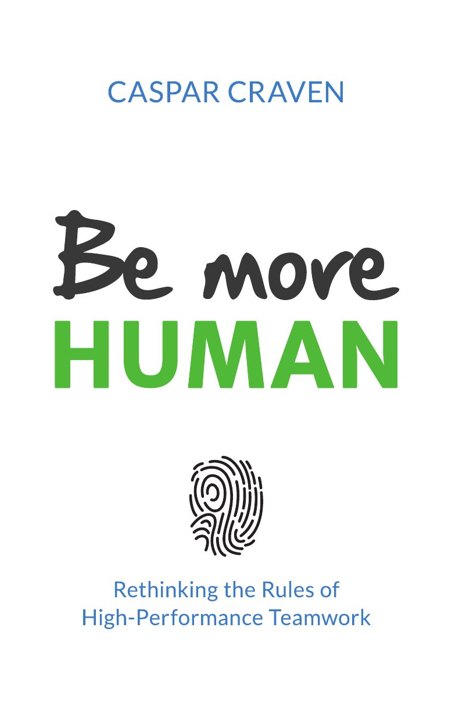
From the book Be More Human
The ideas and stories on this page come from Be More Human: Rethinking the Rules of High-Performance Teamwork by Caspar Craven: what he learnt, often the hard way, about building teams in business, at home and at sea. It's written for anyone asking why their team isn't getting the results it could, or what's wrong with the culture.