

Manager conversations
One-on-one meeting questions (and a simple template)
A good one-on-one is the most valuable half hour in a manager's week. A bad one is a status update that could have been an email. Here's how to make sure yours are the first kind.
The short answer: the best one-on-one meeting questions are open questions about the person, not just the work: "What's on your mind?", "What's getting in your way?" and "What help do you need from me?". Keep one-to-ones regular, around 15 to 30 minutes, let the team member set most of the agenda, and finish with clear actions. Gallup found frequency matters more than length.1
Why one-on-ones matter so much
Most of what drives engagement happens in the relationship between a person and their manager. The regular one-on-one meeting (or one-to-one, as it's usually called in the UK) is where that relationship is built or lost.
The difference between a meaningful one-on-one and a wasted one usually isn't time. It's the questions, and whether the manager really listens to the answers.
Five habits of great one-on-ones
-
Make them regular and protect them
Weekly or fortnightly, on a fixed day. Cancelling a one-to-one tells someone they are the least important thing in your diary. If you must move it, move it, don't drop it.
-
Let them own the agenda
It's their meeting more than yours. Ask them to bring the topics. Your updates can wait for the team meeting.
-
Start with the person
Before the work, ask how they are, and mean it. Notice what's going on in their life. It is the most human part of the meeting and often the most valued.
-
Listen more than you talk
Phones and laptops away. Aim for them talking most of the time. When they raise something, play it back before you respond so they know you heard it.
-
End with actions, then follow through
Close by agreeing who will do what before next time. Start the next meeting by checking those actions. Following through on small things is how trust is built.
40 one-on-one meeting questions
Don't ask them all. Pick two or three each time and rotate. A few, like "What help do you need from me?", are worth asking every week.
Checking in
- What's on your mind this week?
- How are you, really?
- What's been the best part of your week so far?
- What's been the hardest part?
- How's your workload feeling, on a scale of one to ten?
- Is anything outside work making things harder at the moment?
Progress and blockers
- What did you get done this week that you're pleased with?
- What's getting in your way?
- What help do you need from me?
- What help do you need from the rest of the team?
- Is there anything you're stuck on that we haven't talked about?
- What's one thing I could take off your plate?
- Are your priorities clear? Which ones feel fuzzy?
Energy and strengths
- Which part of your work gave you the most energy this week?
- Which part drained you?
- What are you doing that you'd love to do more of?
- Is there work you'd like to hand over to someone better suited to it?
- When did you last feel you were doing your best work?
Growth and the future
- What have you learnt recently?
- What would you like to get better at?
- Is there a project you'd like to be involved in?
- Where would you like to be in a year or two?
- What would help you get there?
- Who would you like to learn from?
The team and the bigger picture
- How is the team working together at the moment?
- Is there anyone on the team you'd like to recognise?
- Do you understand how your work connects to what the organisation is trying to achieve?
- Is there anything about how we work that you'd change?
- What's something the team should keep doing?
- Is there anything going on in the team I should know about?
Feedback for you, the manager
- What's one thing I could do better as your manager?
- What do I do that helps you most?
- Is there anything I do that gets in the way?
- Are you getting enough feedback from me? Too much?
- How would you like to be recognised when you do great work?
- Is there anything you've wanted to tell me but haven't?
Closing
- What's the most important thing for you to focus on before we next meet?
- What will you have done by next time?
- What will I have done by next time?
- Is there anything else you'd like to talk about?
One idea I borrowed from home: our family kept a short "menu" of questions on the kitchen wall, things like "What have I learnt today?" and "What am I excited about?". At mealtimes one of us picked a question and everyone answered it. A small menu of questions works just as well in a one-to-one. It keeps the conversation fresh without anyone having to prepare.
One-on-one meeting template
Copy this one-on-one meeting template into a shared document for each person, add the date at the top each time and keep a running record.
One-to-one: [name] and [manager]
1. Check-in (5 minutes)
How are you, really? What's on your mind?
2. Their topics (10 to 15 minutes)
- [Topic they want to discuss]
- [Topic they want to discuss]
3. Progress and blockers (5 minutes)
- Pleased with this week: [ ]
- Getting in the way: [ ]
- Help needed from me or the team: [ ]
4. Growth (optional, every few weeks)
What are you learning? What would you like to do more of?
5. Actions before next time (5 minutes)
- [Name] will: [ ]
- [Manager] will: [ ]
Last time's actions
[Done / not done, and what happens next]
Mistakes to avoid
- Turning it into a status update. If it could be an email, make it an email and use the time for the person.
- Doing all the talking. Ask, then wait.
- Only talking about problems. Our brains are wired to spot what's wrong. Make a point of naming what's going well.
- Cancelling when you're busy. That's when people need it most.
- Not following through. One forgotten promise undoes several good meetings.
Try this week: in every one-to-one, ask "What help do you need from me?", write the answer down and do it before your next meeting.
Questions people ask
What should you ask in a one-on-one meeting?
Open questions about the person and their work: what's on their mind, what's getting in their way, what help they need, what gives them energy and how you could do better as their manager.
How long should a one-on-one meeting be?
Around 15 to 30 minutes is enough if they happen regularly. Gallup found frequency matters more than length.
How often should managers have one-on-ones?
Weekly or fortnightly works for most teams. The key is that they are regular and rarely cancelled.
Is there a one-on-one meeting template I can use?
Yes. This page includes a free one-on-one meeting template covering check-in, their topics, progress and blockers, growth and actions. Copy it into a shared document for each person.
Related guides
Sources
The stories and practical ideas on this page come from the book. The figures in the blue boxes come from the published research below.
- Gallup (2023, updated 2026). A Great Manager's Most Important Habit.
- Salesforce. Understand the Value of Inclusive Leadership. Trailhead.
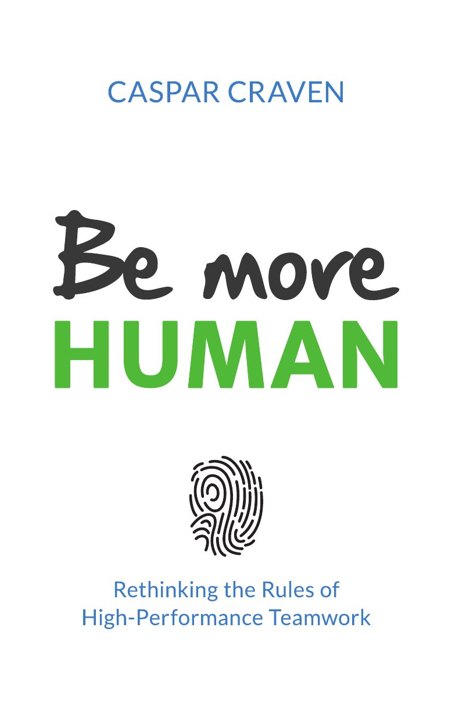
From the book Be More Human
The ideas and stories on this page come from Be More Human: Rethinking the Rules of High-Performance Teamwork by Caspar Craven: what he learnt, often the hard way, about building teams in business, at home and at sea. It's written for anyone asking why their team isn't getting the results it could, or what's wrong with the culture.