

Retention
Stay interview questions: 25 to ask your best people
An exit interview tells you why someone left. A stay interview tells you what would make them stay, while there's still time to do something about it.
The short answer: a stay interview is a short, regular one-to-one conversation with someone you want to keep, about what keeps them, what might pull them away and what would make their work better. The best stay interview questions are simple and open, such as "What keeps you here?" and "What would tempt you to leave?". Listen more than you talk, write the answers down and act on at least one thing quickly.
Why stay interviews matter
Most people who resign have been thinking about it for months. Often nobody asked. Gallup found that 51% of employees who left their job voluntarily said that in the three months before they went, neither their manager nor any other leader had talked to them about their job satisfaction or their future.1
A stay interview fixes that. It's not a performance review and it's not a survey. It's a structured, honest conversation that shows someone you value them and want to understand what would keep them doing their best work with you.
How to run a stay interview
-
Pick your moment
Start with the people you would least want to lose, then work through the whole team over a few weeks. Avoid doing it straight after a pay review or a difficult appraisal, when answers will be coloured by the moment.
-
Explain why you're asking
Say plainly that this isn't a review, nothing they say will be held against them, and you're asking because you want them to stay. Without that reassurance, people give the safe answer.
-
Listen properly
Phones and laptops away. Ask, then stay quiet. Don't defend, explain or fix in the moment. Write down what you hear and play it back so they know it landed. Don't expect the whole truth first time. People test how you react before they tell you more.
-
Act on something quickly
The fastest way to build trust is to act visibly on something they said, ideally within a week. If you can't act on something, say so honestly and explain why.
25 stay interview questions
You won't ask all of them. Pick five or six that fit the person and the moment.
What keeps them
- What keeps you working here?
- What do you look forward to when you start work each week?
- What's the best part of your job right now?
- When did you last feel really proud of something you did here?
- Who on the team do you most enjoy working with, and why?
What might pull them away
- What would tempt you to leave?
- If you were offered another job tomorrow, what would make you think about taking it?
- Have you ever thought about leaving? What was going on at the time?
- What frustrates you most about working here?
- What's one thing you'd change about your job if you could?
Their strengths and energy
- Which parts of your work give you energy, and which drain it?
- What are you great at that we don't use enough?
- Is there a project or kind of work you'd love to take on?
- Do you feel your talents are being used well?
- What would you like to be doing more of in a year's time?
Their future
- Where would you like your career to be in two or three years?
- What would you like to learn next?
- Do you see a future for yourself here? What would make it clearer?
- What support would help you get to your next step?
- Is there anyone in the organisation you'd like to learn from?
How you lead them
- What do I do that helps you do your best work?
- What do I do that gets in the way?
- How do you like to be recognised for good work?
- Do you feel listened to here? When did you last not feel listened to?
- What can I do differently to make your work better?
What a stay interview can reveal
I once hired a salesperson who started brilliantly and then faded. His energy dropped and so did his results. Over a coffee, I asked what was going on for him. He admitted he hated rejection, which is a tough thing to admit in a sales role. We tried him in a consulting role, which didn't fit either, and then moved him into looking after our client relationships. He thrived and became one of the core team. None of that would have happened if I hadn't asked, and listened.
The same conversation can feel uncomfortable when the answer is about money. When a sales director pushed hard for a pay rise we couldn't easily afford, it helped to step into his shoes and understand why it mattered so much to him. We found a deal tied to the team's results that worked for both of us. People rarely leave over one thing. A stay interview helps you see the whole picture.
After the stay interview
- Write down what you heard and anything you agreed to do.
- Act on one thing within a week, and tell them you have.
- Look for patterns across the team. If three people mention the same frustration, it's a team problem, not an individual one.
- Repeat it. Once or twice a year is a good rhythm, with lighter versions in regular one-to-one meetings.
Try this week: book a 30-minute stay interview with the person you'd least want to lose, and ask just three questions: what keeps you here, what would tempt you to leave, and what can I do differently?
Questions people ask
What is a stay interview?
A structured one-to-one conversation with an employee you want to keep, about what keeps them, what might tempt them away and what would make their work better. It's held long before they think about leaving.
How often should you do stay interviews?
Once or twice a year is a good rhythm for a formal stay interview, with lighter check-ins on the same themes in regular one-to-ones.
What is the difference between a stay interview and an exit interview?
An exit interview happens after someone has decided to leave. A stay interview happens while there is still time to act on what you hear.
Related guides
Sources
The stories and practical ideas on this page come from the book. The figures in the blue boxes come from the published research below.
- McFeely, S. and Wigert, B. (2019). This Fixable Problem Costs U.S. Businesses $1 Trillion. Gallup.
- Yi, R. (2024). Employee Retention Depends on Getting Recognition Right. Gallup, with Workhuman.
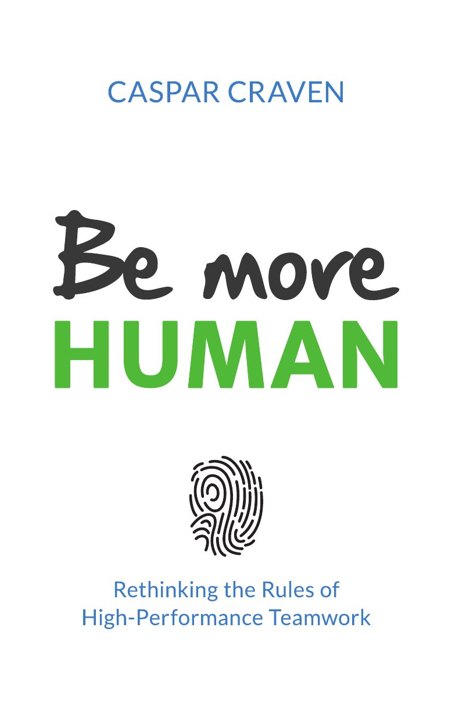
From the book Be More Human
The ideas and stories on this page come from Be More Human: Rethinking the Rules of High-Performance Teamwork by Caspar Craven: what he learnt, often the hard way, about building teams in business, at home and at sea. It's written for anyone asking why their team isn't getting the results it could, or what's wrong with the culture.